MOZA Racing
8.0/10
MOZA R21 Ultra and R25 Ultra Review: True Torque, and What It Actually Buys You
MOZA R21 Ultra and R25 Ultra Review: True Torque, and What It Actually Buys You
PC · Xbox Series X|S
Read review →

As a piece of engineering this is close to the top of what sim racing hardware currently does. 110 kg of brake force, resistance that changes with the car's state, and haptics that tell you when the ABS is working through your foot instead of through a light on the dash. The value score is where the honesty has to go. A three-pedal setup runs past $3,000 before the baseplate, and multiple reviewers who tested it concluded most sim racers should not buy one. That is not a knock on the hardware. It is a knock on the price relative to what a $500 load cell already gives you.
16 min read · Last updated 5 September 2026
How this review was put together. WheelVerdict did not receive an ActivePedal sample from Simucube. This is a synthesis of manufacturer documentation, published hands-on testing from Boosted Media, BoxThisLap, SimRacingSetup, MySimRig, Raceful and DannyLee, plus owner reports. Sources are linked inline. This is a product where reviewers disagree sharply, and those disagreements are reported rather than averaged away.
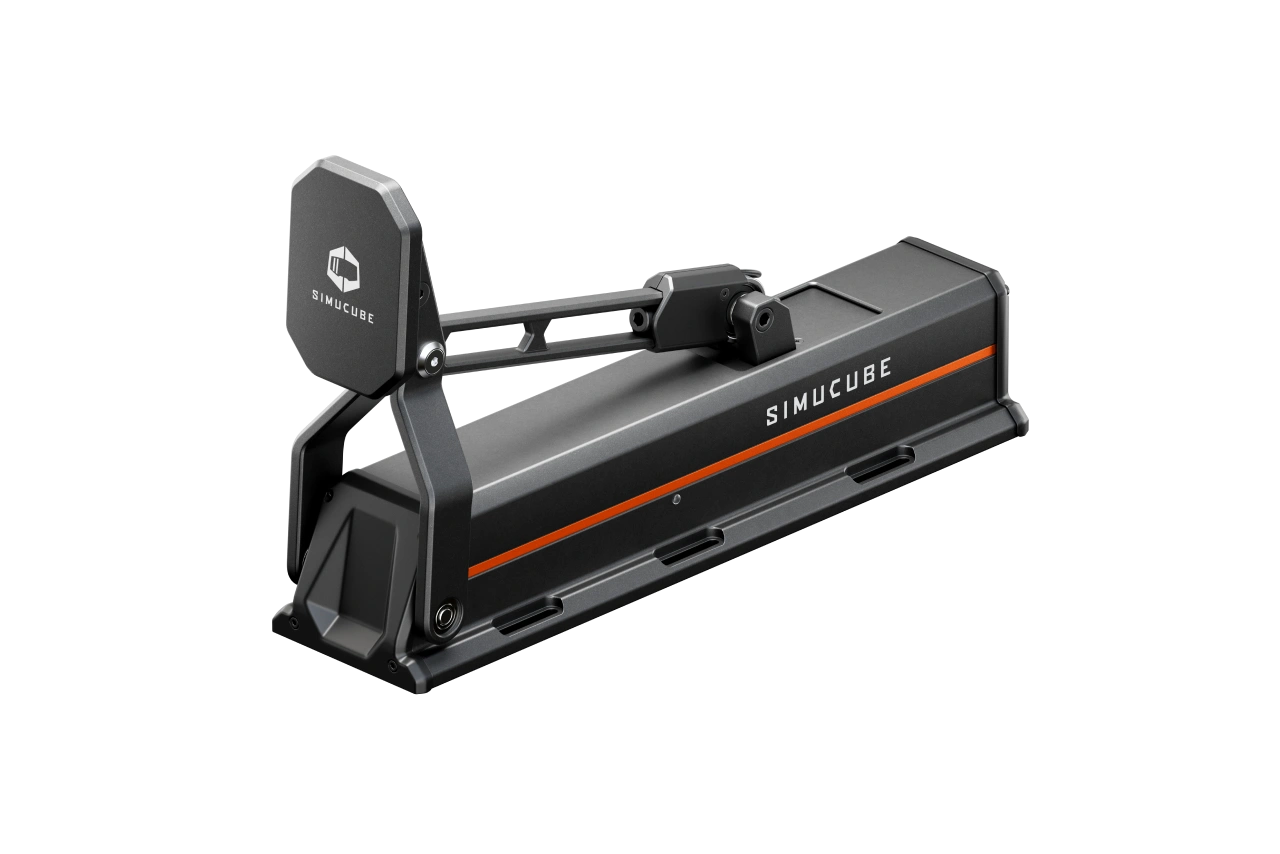
A load cell brake pedal measures how hard you push against a spring. The spring never changes. The ActivePedal Pro throws the spring away and puts a motor there instead, so the resistance under your foot can change moment to moment, and the pedal can push back.
It costs $1,849. For one pedal.
That number is the review. Everything else is working out who it is actually for, and the honest answer is a much smaller group than the marketing implies.
| Category | Weight | Score |
|---|---|---|
| Specs for the price | 35% | 60 |
| Compatibility | 25% | 70 |
| Community consensus | 25% | 62 |
| Support and warranty | 15% | 85 |
| Overall | 6.7 / 10 |
Weighted score. Synthesised from 8 independent sources; evidence tier: specification analysis, not hands-on testing.
Compatibility: PC. Works alongside any wheel base. The Link Hub is required for telemetry-driven effects.
As a piece of engineering this is close to the top of what sim racing hardware currently does. 110 kg of brake force, resistance that changes with the car’s state, and haptics that tell you when the ABS is working through your foot instead of through a light on the dash.
The value score is where the honesty has to go. A three-pedal setup runs past $3,000 before the baseplate, and multiple reviewers who tested it concluded most sim racers should not buy one. That is not a knock on the hardware. It is a knock on the price relative to what a $500 load cell already gives you.

Links go to the official brand page. Note carefully that pricing is per pedal.
| Configuration | Price | Link |
|---|---|---|
| ActivePedal Pro, single | $1,849 / £1,471 / €1,402 ex VAT | Simucube official |
| ActivePedal Ultimate, single | $2,299 / €1,999 | Simucube official |
| Baseplate | ~$289 | Required for most rigs |
One published source lists a US price of $1,719, which appears to be an older figure from around launch. $1,849 is what current listings show. Verified 5 September 2026.
A conventional load cell pedal is a spring and a strain gauge. You push, the spring resists with a fixed curve, the gauge measures the force, and the game gets a number. The feel never changes because the spring cannot change.
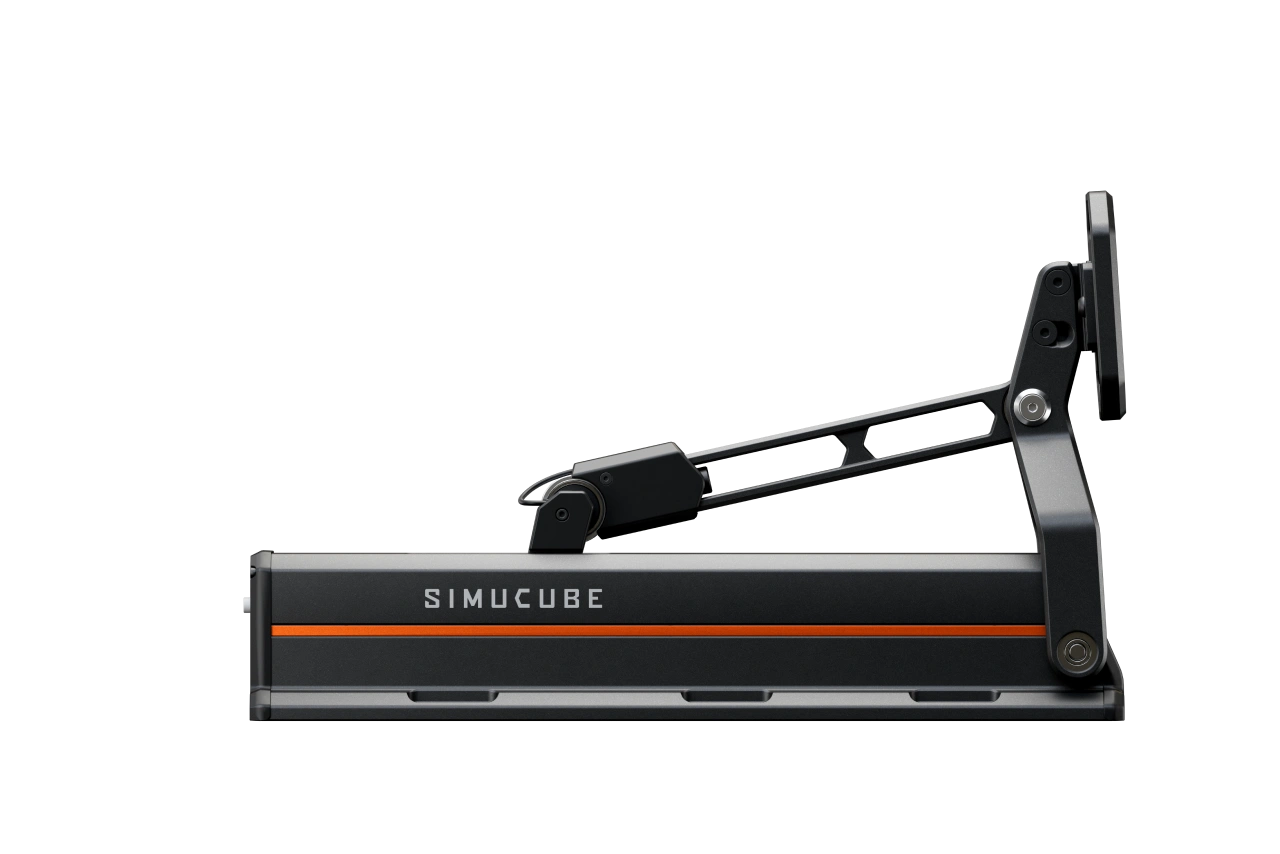
The ActivePedal replaces that with a motor driving the pedal arm. Because software controls the resistance, the pedal can do things a spring physically cannot:
The claim is that this makes braking more consistent, because you get information about grip at the moment you need it rather than half a second later through the wheel.
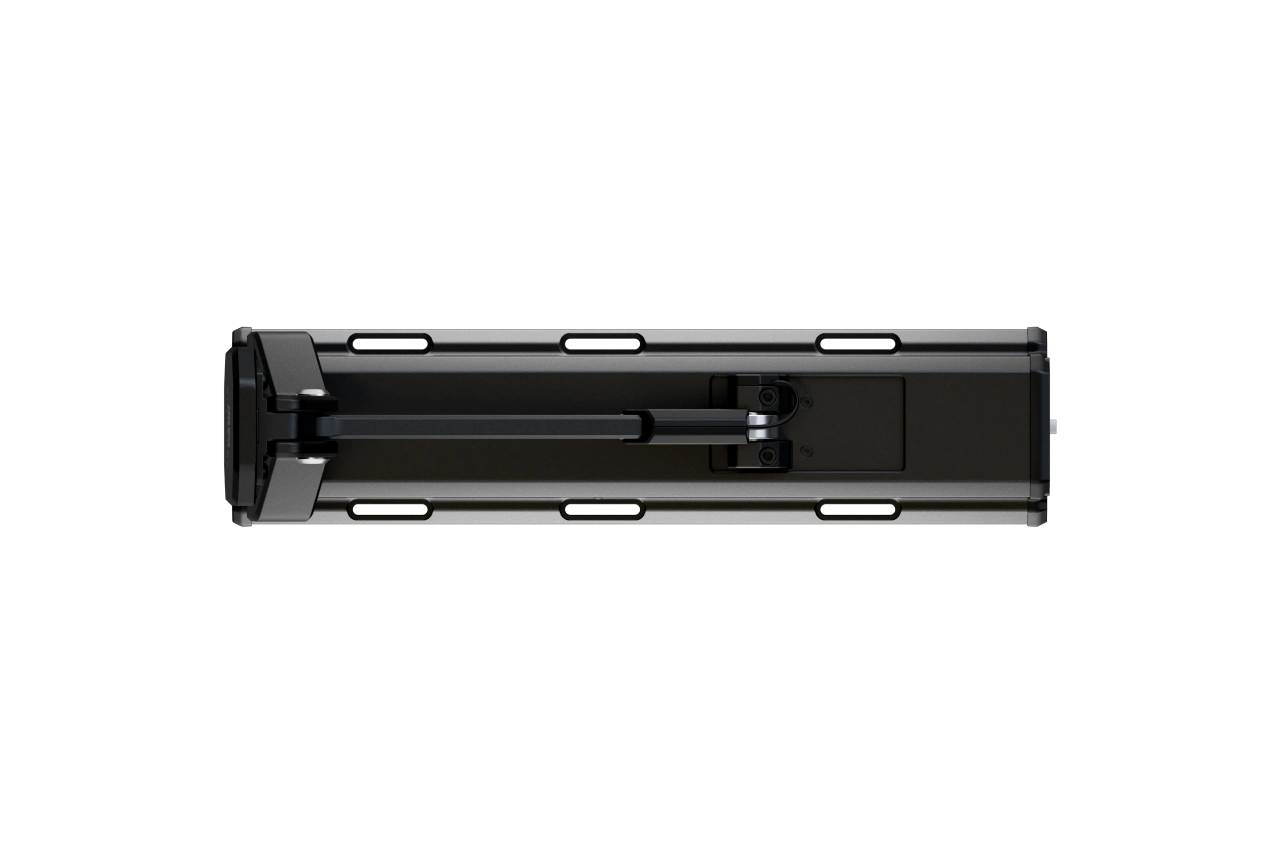

| Specification | Value |
|---|---|
| Maximum brake force | 110 kg / 1,079 N |
| Travel range | 5 to 74 mm, adjustable |
| Power draw | 10 to 100 W average, 280 W peak |
| Dimensions | 100 x 255 x 418 mm |
| Weight | 5.8 kg excluding PSU |
| Connection | Simucube Link (Ethernet) plus separate power input |
| Power supply | One per pedal, no daisy-chain |
| Passive load cell ports | 2 |
| Warranty | 3 years |
| Response frequency | Not published |
| Load cell resolution | Not published |
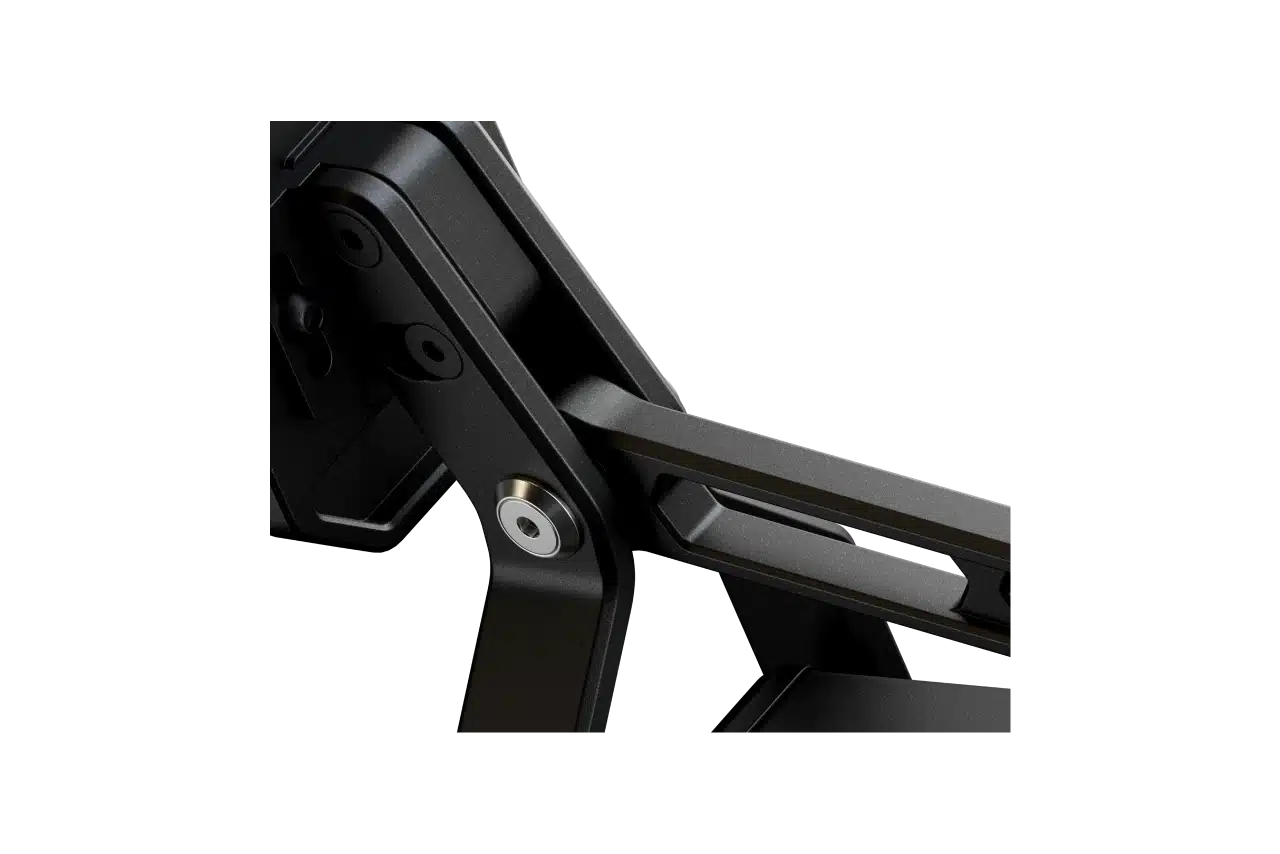
Those last two lines deserve attention. At this price, response frequency and sensor resolution are the numbers a buyer would reasonably expect to compare against rivals. Simucube does not publish either, and no reviewer has measured them independently. That is a gap.
Also worth correcting: one published review states a two year warranty. Simucube’s own documentation and every other source say three years.
This is the only question that justifies the price, so it is worth laying out both sides properly.
The evidence that it helps:
The evidence that it does not matter:
Read those together and a pattern appears. The gains are largest in cars with less downforce and more weight transfer, where brake modulation matters most. In a formula car with high downforce, the difference shrinks to a tenth. And the gain arrives only after significant time spent tuning, which is not the same as an out-of-the-box improvement.
The reviewers also split hard on the value question. One published score put value at 82 out of 100. Boosted Media put it at 6 out of 10. That is not a small gap, and it reflects a genuine disagreement about whether measurable gain justifies this outlay.
This is the part that gets downplayed and should not be.
Several owners and at least one reviewer describe an audible scratching or scraping sound from the mechanism. It is not an isolated defective unit, and it is most noticeable when an ActivePedal is used as a throttle, where the motion is more continuous than the sharp stabs of braking.
If you race with speakers rather than a headset, or if the rig sits in a shared room, this belongs on your list before you spend $1,849. It is not documented as a failure, but it is documented as a characteristic.
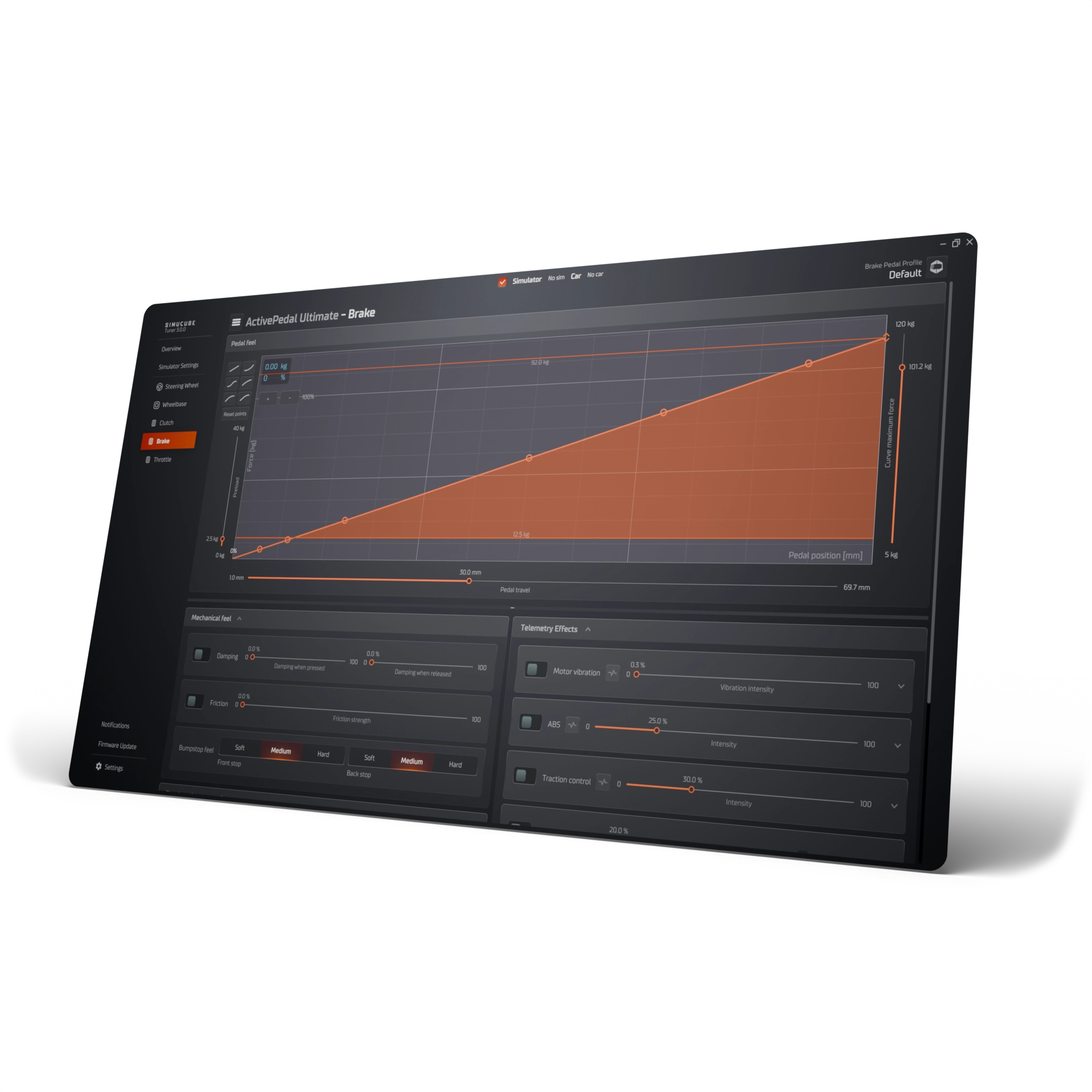
Simucube’s Tuner software handles the profiles: per-car and per-sim force curves, travel, haptic effect strength and calibration. It is deep, and reviewers rate it well.
Two limitations are worth knowing:
iRacing exposes only two effects. ABS and engine vibration. The full haptic set is not available there, which matters because iRacing is where a lot of the target audience races.
No SimHub support. SIMAGIC’s P-series pedals, at a quarter of the price, do work with SimHub. For a product at this tier that is a conspicuous omission.

At 418 mm long and 5.8 kg, this is a large object. Most rigs need the baseplate, at around $289, and one reviewer reported about 30 minutes to get the base mounted.
The power arrangement is the thing people underestimate. Each pedal has its own PSU. Three ActivePedals means three power bricks and three sockets, and a peak draw approaching 840 W across the set. That is a real consideration for a domestic room on a single circuit shared with a PC and monitors.
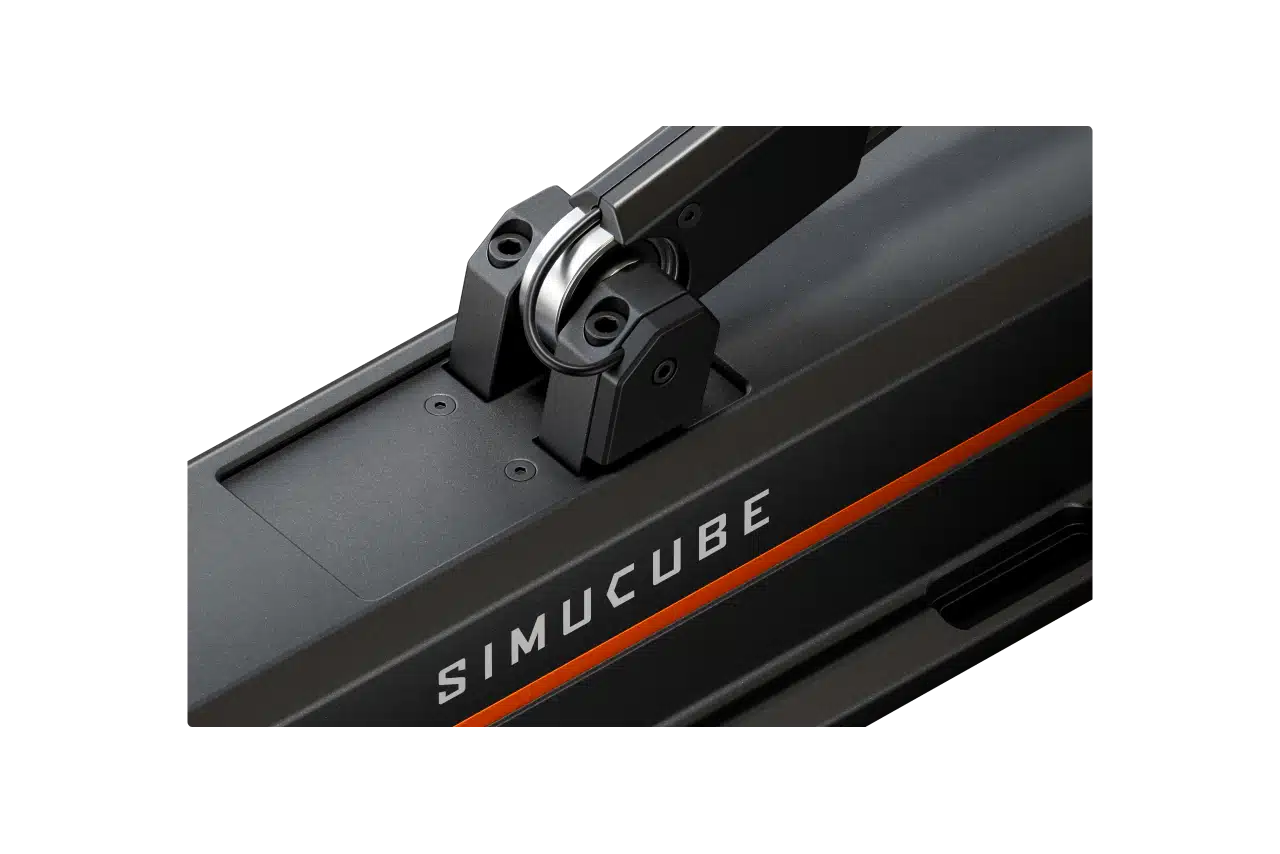
The two passive load cell ports are the sensible escape hatch. Most reviewers agree the brake is where active technology earns its keep, and that active throttle and clutch are much less compelling. Buying one ActivePedal for the brake and pairing it with conventional throttle and clutch pedals is both cheaper and, by most accounts, the better setup.

| Pedal | Type | Price | Note |
|---|---|---|---|
| Simucube ActivePedal Pro | Active motor | $1,849 / €1,402 (1 pedal) | Reviewed here |
| Simucube ActivePedal Ultimate | Active motor | $2,299 / €1,999 (1 pedal) | 170 kg, invertible, 5 year warranty |
| Asetek Invicta | Hydraulic | $759 / €950 (2 pedals) | Complete two-pedal set for less than one ActivePedal |
| Heusinkveld Ultimate+ | Hydraulic load cell | €1,199 (3 pedals) | 140 kg, dual hydraulic, three pedals |
| SIMAGIC P1000 | Load cell | $469 (1 pedal) | Modular, SimHub support |
| SIMAGIC P2000 | Load cell | $679 (1 pedal) | Higher tier load cell |
| Heusinkveld Sprint | Load cell | ~€500 to €700 (set) | Common pairing partner |
| Cube Controls SP01 | Load cell + hydraulic | ~€729 to €1,260 | Depending on configuration |
The comparison that should stop most buyers: Heusinkveld Ultimate+ gives you three hydraulic pedals for €1,199. The ActivePedal Pro gives you one pedal for €1,402. Both are excellent. Only one of them is a complete set.
As of now Simucube is effectively alone in shipping a mature commercial active pedal. MOZA’s mBooster at around €799 works on a different principle, and Fanatec announced an active pedal at SimRacing Expo 2025 without shipping detail. If competition arrives, the value calculation here changes quickly.
Anyone still on rubber-and-spring pedals. The upgrade from a spring pedal to a good $400 load cell is the biggest single improvement available in sim racing. Do that first. It will make you faster than this will.
Drivers without a rigid rig. 110 kg of force into a folding stand is pointless and unpleasant. This needs aluminium profile.
People racing on speakers in a shared room. The mechanical noise is documented and it is not subtle.
Anyone wanting three active pedals. Over $3,000, three power supplies, 840 W peak, and by most reviewers’ accounts the throttle and clutch benefit far less than the brake.
iRacing-only racers who want the full haptic feature set. iRacing gives you two effects out of five.
SimHub users. Not supported, at any price, while a $469 SIMAGIC pedal is.
The 95 percent. That figure is a reviewer’s, not mine, but the reasoning holds. If you cannot currently brake to a consistent pressure on a load cell, this will not fix that.
The advertised price is for one pedal. A realistic build:
| Item | Cost |
|---|---|
| ActivePedal Pro, brake only | $1,849 |
| Baseplate | ~$289 |
| Conventional throttle and clutch | $300 to $700 |
| Link Hub (for telemetry effects) | Extra |
| Sensible single-active setup | ~$2,500+ |
| Three ActivePedals instead | $5,547 before baseplate |
The single-active-brake build is the one that makes sense. The three-pedal build is where the value argument collapses entirely.
For a small group, yes, and for everyone else, no. That is an unsatisfying answer but it is the honest one.
The group it is for: drivers already on a high-end load cell, on a rigid aluminium rig, racing seriously enough that a consistent half second matters, with the budget to treat $1,849 as a component rather than a purchase. For those people the technology does something no spring can, and the published testing supports a real gain.
For anyone else, the money goes further almost anywhere else on the rig. A €1,199 Heusinkveld Ultimate+ set gives you three hydraulic pedals. A $469 SIMAGIC P1000 gives you most of the braking consistency for a quarter of the price and works with SimHub.
The hardware is not the problem here. The hardware is excellent. The problem is that the thing it improves is already 80 percent solved by equipment costing a fifth as much, and the last 20 percent is priced like the first 80.
Buy the brake, not the set. And buy a load cell first if you do not already have one.
Does it work with a non-Simucube wheel base?
Yes. It presents as a standard PC USB game controller and does not care what base you run.
Do I need the Link Hub, or can I plug straight into the PC?
It works plugged directly in, but without the Link Hub you lose the telemetry-driven effects and it behaves much like a very good conventional load cell. The Hub is what makes it an active pedal in practice.
Can I mix it with Heusinkveld or other brand pedals?
Yes. There are two passive load cell ports for exactly this. Software integration with third-party pedals is limited, but mechanically and electrically it works, and this is the setup most reviewers recommend.
Can one power supply run all three pedals?
No. Every pedal needs its own PSU and its own mains socket. Three pedals means three of each.
Is it noisy?
Yes, to a degree. Owners and reviewers describe a scratchy or scraping mechanical sound, most obvious when the unit is used as a throttle rather than a brake.
Does iRacing support all the haptic effects?
No. iRacing exposes ABS and engine vibration only, not the full effect set.
Does it support SimHub?
No. This is an advantage held by the much cheaper SIMAGIC P-series.
Pro or Ultimate?
The Ultimate adds higher force beyond 110 kg, inverted mounting, and a five year warranty, for around $450 more. The Pro covers what almost everyone needs. Choose Ultimate only if you specifically need inverted mounting or more than 110 kg.
Can the Pro be mounted inverted?
No. Only the Ultimate supports inverted mounting.
Is an active throttle and clutch worth it, or just the brake?
Most reviewers agree the brake is where the technology matters. Active throttle and clutch are considerably less compelling, and pairing one ActivePedal brake with conventional throttle and clutch is the better-value setup.
| Specification | Detail |
|---|---|
| Type | Active, motor driven |
| Maximum brake force | 110 kg / 1,079 N |
| Travel | 5 to 74 mm, adjustable |
| Dimensions | 100 x 255 x 418 mm |
| Weight | 5.8 kg excluding power supply |
| Power draw | 10 to 100 W average, 280 W peak |
| Power supply | One per pedal, not daisy-chainable |
| Connection | Simucube Link over Ethernet |
| Passive load cell ports | 2 |
| Software | Simucube Tuner |
| SimHub | Not supported |
| Inverted mounting | Not supported on Pro |
| Warranty | 3 years |
| Platform | PC |
| Response frequency | Not published by manufacturer |
| Load cell resolution | Not published by manufacturer |
Reviews on WheelVerdict are written by our editorial team. They are built from published independent testing, manufacturer documentation and owner reports rather than sponsored sample loans, and every review states which sources informed it. We do not accept payment for scores.
Product images courtesy of Simucube.
Affiliate disclosure: WheelVerdict may earn a commission on purchases made through links on this page, at no additional cost to you. Commission does not influence scoring. This review is based on published independent testing and manufacturer documentation, not on a manufacturer-supplied sample.
Pricing last verified 5 September 2026.
MOZA R21 Ultra and R25 Ultra Review: True Torque, and What It Actually Buys You
Fanatec ClubSport Racing Wheel F1 Review: Real Carbon, Real Licence, Two Paddles
Simucube 2 Pro Review: Still the Benchmark, Now Undercut by Everyone