Simucube
7.5/10
Simucube 2 Pro Review: Still the Benchmark, Now Undercut by Everyone
Simucube 2 Pro Review: Still the Benchmark, Now Undercut by Everyone

The specification score is the high one and it is earned on arithmetic. At $699 for 21 Nm and $899 for 25 Nm, these are the cheapest flagship-tier direct drive bases anyone currently sells. The compatibility score is the low one, and it is the part buyers most often skip past.
14 min read · Last updated 5 September 2026
How this review was put together. WheelVerdict did not receive an R21 Ultra or R25 Ultra sample. This is a synthesis of MOZA’s own specifications and support documentation alongside published independent testing from Traxion, SimRacingCockpit, Boosted Media, OC Racing and SimRacingSetup. Sources are linked inline. Where published figures disagree, both are reported.
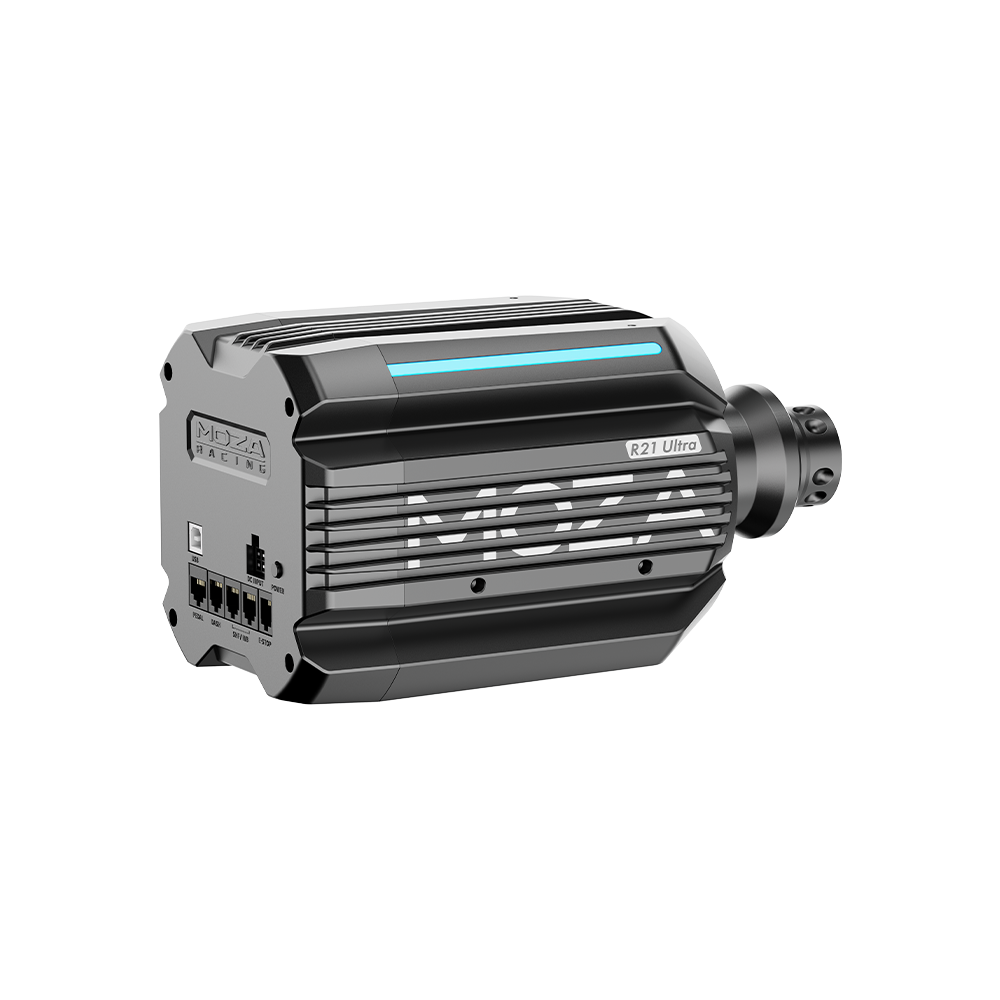
MOZA spent years being the brand that undercut everyone. The R21 Ultra and R25 Ultra are the first bases where the company stopped competing on price alone and started competing on a specification nobody else at this level ships: a physical torque sensor inside the housing.
That sensor is the "True Torque" in the name. It only exists on the R25 Ultra. Understanding what it does, and how little it may matter to you, is most of the buying decision here.
| Category | Weight | Score |
|---|---|---|
| Specs for the price | 35% | 90 |
| Compatibility | 25% | 62 |
| Community consensus | 25% | 84 |
| Support and warranty | 15% | 78 |
| Overall | 8.0 / 10 |
Weighted score. Synthesised from 7 independent sources; evidence tier: specification analysis and published third-party testing, not hands-on testing.
Compatibility: PC natively. Xbox works only if you buy the MOZA ESX rim. PlayStation is not supported at any price.
The specification score is the high one and it is earned on arithmetic. At $699 for 21 Nm and $899 for 25 Nm, these are the cheapest flagship-tier direct drive bases anyone currently sells.
The compatibility score is the low one, and it is the part buyers most often skip past.

| Model | Torque | Price |
|---|---|---|
| MOZA R21 Ultra | 21 Nm | $699 / GBP 699 / EUR 799 |
| MOZA R25 Ultra | 25 Nm | $899 / GBP 899 / EUR 999 |
| R25 Ultra, Australia | 25 Nm | AU$1,649 |
One note on stock. At the time of writing the R25 Ultra shows as sold out on MOZA’s US store while the R21 Ultra dispatches within three business days. That is a supply state, not a discontinuation: both products remain listed, priced and supported, and both went on sale on 30 October 2025.
If you see the R25 Ultra quoted around $1,649, check the currency. That is the Australian price, and it has been misreported as USD more than once.
Prices verified 5 September 2026.
| Specification | R21 Ultra | R25 Ultra |
|---|---|---|
| Torque | 21 Nm sustained | 25 Nm sustained |
| Motor | Zero-cogging flat-wire DD | Zero-cogging flat-wire DD |
| Torque sensor | No | Yes, 0.1% accuracy, up to 2 kHz |
| Encoder | 21-bit magnetic, 2,097,152 PPR | 21-bit magnetic, 2,097,152 PPR |
| CPU | 600 MHz | 600 MHz |
| Rated power | 360 W | 378 W |
| Input | 110-220 V AC to 36 V DC | 110-220 V AC to 36 V DC |
| Weight | 9.0 kg | 9.1 kg |
| Dimensions | 248.8 x 140 x 135 mm | 248.8 x 140 x 135 mm |
| USB refresh | 1000 Hz | 1000 Hz |
| Housing | Aluminium alloy, plastic rear cover | Aluminium alloy, plastic rear cover |
| Mounting | Front, side, bottom | Front, side, bottom |
| RGB | 2 strips, 16.7 million colours | 2 strips, 16.7 million colours |
| Platform | PC, Xbox via ESX rim | PC, Xbox via ESX rim |

Two figures deserve unpacking, and one deserves a warning.
21 Nm and 25 Nm are quoted as sustained, not peak. That distinction matters. Plenty of bases advertise a peak number they can hold for a few seconds before thermal management pulls it back. MOZA is claiming these figures are what the motor holds continuously, and no reviewer reported throttling that contradicts it.
The 21-bit encoder gives 2,097,152 distinct positions per revolution. For context, the SIMAGIC Alpha Evo uses the same 21-bit resolution, while a Simucube 2 Pro runs 22-bit. Each bit doubles the count, so Simucube still has twice the positional resolution, at roughly twice the price.
The warning is on weight. MOZA lists the R25 Ultra at 9.1 kg; SimRacingCockpit measured 9.2 kg. The gap is trivial in itself, but it is a reminder that these are not desk-clamp devices. Combined with the torque, you need a rig.

This is the marquee feature and the reason the R25 Ultra costs $200 more, so it deserves a plain explanation.
Almost every direct drive base infers how much force it is producing. It knows how much current it is sending to the motor, it knows the motor’s characteristics, and it calculates torque from that. The calculation is good but it is still a model, and the model drifts with temperature, wear and load.
The R25 Ultra puts a physical sensor in the loop. It measures the torque actually leaving the shaft, 0.1 percent accuracy at up to 2 kHz, and feeds that back so the base can correct itself against reality rather than against its own assumptions.

In principle that means the force you feel corresponds to a measured physical output rather than an estimate, and that the correspondence holds as the motor heats up over a stint.
In practice, the reviewers who have used both are consistent and slightly deflating. Boosted Media called it a luxury rather than a necessity for most drivers, useful mainly for catching slides in competitive contexts. SimRacingCockpit reached the same place: the R21 Ultra has "plenty of torque for the vast majority of sim racers", and the sensor is the reason to buy the R25 only if you are chasing the last increment of fidelity.
Nobody has published a blind A/B of the two bases at matched torque settings, which is exactly the test that would establish whether the sensor is audible in the hands or only on the spec sheet.

Here is the uncomfortable finding. Of the reviewers who tested both, the majority recommend the cheaper one.
Boosted Media put it directly: the R21 Ultra is the better value overall because most drivers never use the maximum torque available to them. SimRacingCockpit called the R21 a "particularly safe bet" for most sim racers and reserved the R25 for competitive and professional drivers. Traxion, reviewing the R21 alone, called it an affordable and powerful step up.
The $200 gap buys you 4 Nm and the torque sensor. Consider what 4 Nm means in context: almost nobody runs 21 Nm at full in-game strength. Traxion described doing so as "simply overkill" and dialled it back. If you are going to run 12 Nm, the base that can deliver 21 is already far past your ceiling.
Buy the R21 Ultra unless you have a specific reason not to. It is the volume choice and the value choice.
Buy the R25 Ultra if you race competitively, you already know you run high torque, and you want measured rather than modelled force. It is a real upgrade, just a narrow one.
The compatibility score of 62 is the lowest number in this review and it comes from two separate issues.
Platform coverage. These are PC bases. Xbox works, but only through the MOZA ESX rim, which is currently the only MOZA steering wheel carrying an Xbox licence. Both the R21 Ultra and R25 Ultra are on the supported list, so the path exists, but it commits you to one specific rim for console play. PlayStation is not supported on any current MOZA base.
If you race on PS5, stop reading. This is not a product for you, and no firmware update will change that.
Ecosystem openness. MOZA’s first-party ecosystem is genuinely deep. The base is a hub, with dedicated ports for pedals, dash, shifter, handbrake and an emergency stop, so a full MOZA CM2 dash and KS Pro wheel build wires together cleanly.
The problem is what happens when you want to leave. There is no USB passthrough. Boosted Media singles this out, and correctly: at this performance tier, buyers frequently want to run a third-party rim with its own USB electronics, and this base does not offer them a route. Side and front mounting also require MOZA’s own brackets rather than a standard pattern, and SimRacingSetup notes mounting incompatibilities with some popular third-party rigs.
None of this is disqualifying. All of it is worth knowing before you commit to a platform rather than a product.

Every reviewer says a version of the same thing: these bases are good, and they are not good out of the box.
The consistent praise. Zero cogging eliminates the rotational notchiness of older motor designs. SimRacingSetup, scoring the R25 Ultra 8.9 out of 10, described it as "one incredibly smooth wheel" and noted that you can feel weight build as the car’s balance shifts. OC Racing found it distinguished surface texture, kerbs and steering weight cleanly, calling the R25 "the best value flagship yet". Traxion confirmed iRacing’s 360 Hz path works with no perceptible lag.
The consistent complaint. Default profiles are wrong. Traxion described the feedback as spiky and prone to excessive oscillation until damping was added. OC Racing said the base "did not feel great" before tuning. SimRacingCockpit recommends disabling Hands-Off Protection immediately, and Boosted Media traces the vague centre feel directly to that feature.
That is a fixable problem, but it is a real one, and it costs you an evening. It also means first impressions of these bases in a showroom or a friend’s rig may be misleading in either direction.
The one substantive performance criticism. Boosted Media found the R25 Ultra less responsive at 10 to 14 Nm, the range most people actually drive at, than an Asetek La Prima or SIMAGIC Alpha Evo Pro. That is a pointed finding, because it targets exactly the operating point that peak torque figures obscure. Traxion, separately, said they would personally take a SIMAGIC Alpha Evo Pro over the R21 Ultra at the same $699 for its smoother overall feedback.
Two reviewers, testing different models, independently preferring a SIMAGIC at the same price is the most useful dissent in the record here.

MOZA’s software is capable and unfriendly, and reviewers split on which of those matters more.
Traxion called Pit House "relatively slick" with helpful tooltips and reliable firmware updates. SimRacingCockpit praised the FFB Equalizer and Base FFB Curve tools and the one-click presets, while conceding the interface "isn’t immediately intuitive for beginners". SimRacingSetup was blunter: granular customisation that overwhelms casual users.
Boosted Media raised the most concrete objection, that settings overlap in ways that make it unclear which control is doing what, and that low-frequency effects support is limited to iRacing.
Compared with the True Drive suite on a Simucube, Pit House is less deep but no easier. That is an awkward position to occupy.
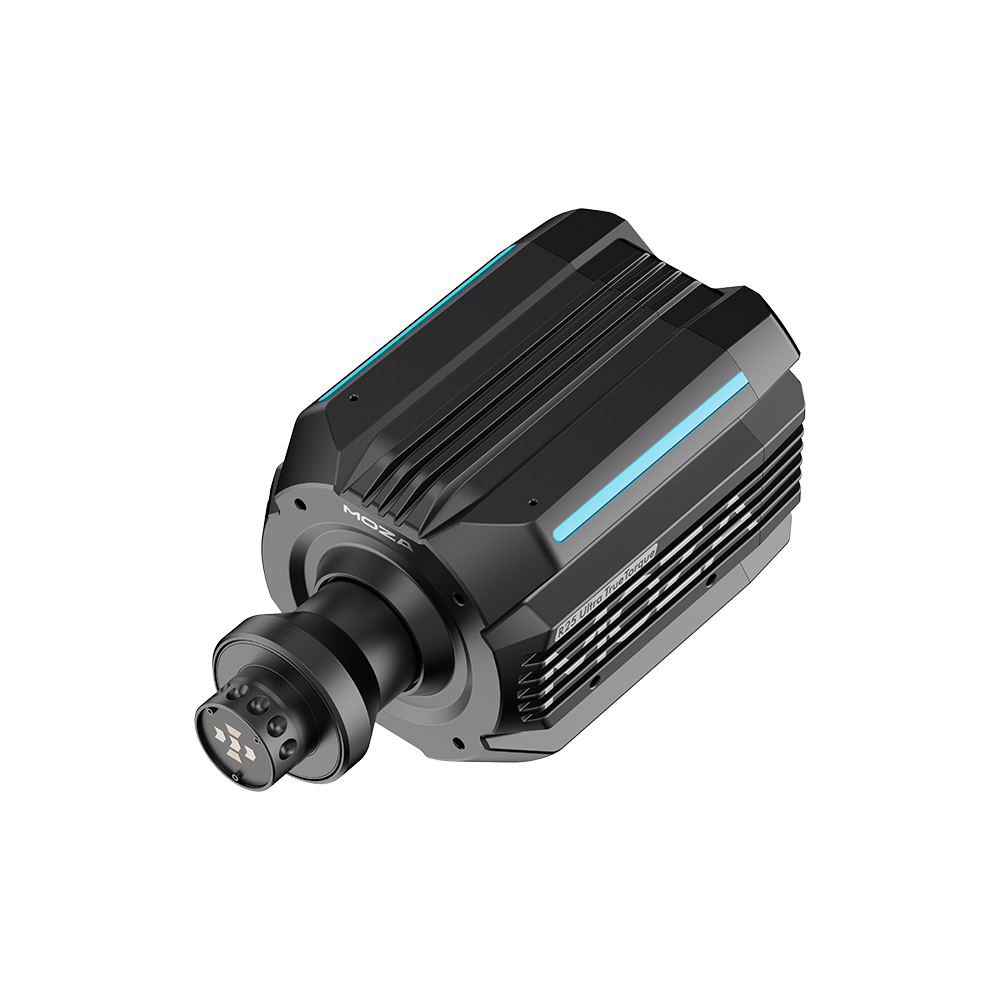
The housing is CNC-machined die-cast aluminium with a plastic rear cover, and reviewers are near-unanimous that it feels premium. SimRacingCockpit noted the rear panel is "dense plastic rather than metal" but solid. OC Racing called the machining and finish "truly premium".
The dissent comes from Boosted Media, who flagged the spray-painted finish and raised quality control concerns about it. One reviewer’s paint observation is not a pattern, but it is on the record.
The annoyances are small and repeated:
The power button is on the rear. OC Racing called it "an unnecessary inconvenience" and SimRacingCockpit listed it as a con. On a base you mount into a rig, this is the kind of thing you notice every single session.
The RGB placement is impractical. Both strips are on the housing, where your rim and hands sit in front of them. The telemetry integration is clever; you often cannot see it.
The quick release orientation. Traxion received a unit with the quick-release section incorrectly oriented, risking connector damage. A single assembly error rather than a design fault, but worth a check on unboxing.

PlayStation racers. No support, no workaround.
Xbox racers who want rim choice. One licensed rim, the ESX, and that is the whole catalogue.
Anyone running a third-party rim with its own USB electronics. No passthrough.
Desk-clamp and folding-rig owners. 9 kg producing 21 to 25 Nm needs aluminium profile or steel. A Trak Racer TR8 Pro at 25 Nm rated is the right neighbourhood.
Anyone who wants to plug in and drive. Budget an evening for tuning, and expect to turn Hands-Off Protection off first.
Buyers optimising purely for feel at moderate torque. Two independent reviewers preferred a SIMAGIC at the same money.
| Item | Cost |
|---|---|
| MOZA R21 Ultra | $699 |
| MOZA R25 Ultra | $899 |
| Mounting bracket, side or front | Extra, MOZA proprietary |
| Steering wheel | $200 to $1,000 |
| Pedals | $300 to $1,800 |
| Rigid rig | $500 to $1,500 |
The base is the cheapest part of a build that will pass $2,000 without difficulty. The $200 difference between the two Ultras is roughly 10 percent of a typical total, which is another argument for putting it into pedals instead.
MOZA lists up to 24 months of coverage on the main body, with manufacturing defects covering return and replacement costs, plus a 14-day full-refund return window on unused product in original packaging.
Two years is standard for the category and matches what Simucube documents on its own site. It is a shorter horizon than the three-year coverage some rivals advertise, and MOZA’s phrasing of "up to" 24 months is worth reading closely against your region’s terms before purchase.
Firmware and Pit House updates have been frequent since launch, which is the more meaningful support signal for a product that is under a year old.


Yes, with the qualification that you should probably buy the cheaper one.
The R21 Ultra at $699 is the strongest argument either of these bases makes. Twenty-one newton metres of sustained torque, a 21-bit encoder and a zero-cogging flat-wire motor at that price was not available two years ago from anyone. The value case is arithmetic, not opinion.
The R25 Ultra is a good product with a narrow audience. The True Torque sensor is real engineering and the specification is honest, but the people who have used both keep pointing at the R21. Unless you race at high torque competitively, the $200 buys you a number you will not reach and a sensor you may not detect.
What holds the overall score to 8.0 rather than higher is the compatibility ceiling and the tuning burden. No PlayStation, Xbox through exactly one rim, no USB passthrough, proprietary mounting brackets, and a default profile that several reviewers had to fix before the base felt right. Those are platform decisions, not defects, but they narrow who this suits.
If you are on PC, building into MOZA’s ecosystem deliberately, and willing to spend an evening in Pit House, this is the most torque per pound available at the flagship tier and it is not close.

What is the difference between the R21 Ultra and R25 Ultra?
Four newton metres and the True Torque sensor. The R25 has 25 Nm and a physical torque sensor rated at 0.1 percent accuracy up to 2 kHz; the R21 has 21 Nm and no sensor. Everything else, motor, encoder, CPU, housing and ports, is shared.
Is the True Torque sensor worth $200?
For most people, no. Boosted Media described it as a luxury rather than a necessity, and both it and SimRacingCockpit steer typical buyers to the R21 Ultra.
Do these work on PS5?
No. MOZA has no PlayStation licence on any current base.
Do these work on Xbox?
Yes, but only with the MOZA ESX rim, which is the only MOZA wheel carrying an Xbox licence. Both Ultra bases are on the supported list.
Is the 21 Nm figure peak or sustained?
MOZA quotes both the 21 Nm and 25 Nm figures as sustained output, not a brief peak.
Can I use a third-party steering wheel?
Mechanically yes with an adapter, but there is no USB passthrough, so a rim with its own USB electronics has no data path.
Do they overheat?
No reviewer reported thermal issues. Cooling is passive with no fans, which also means silent operation.
Do I need to tune them before driving?
Effectively yes. Multiple reviewers found the default profile spiky or flat and recommend disabling Hands-Off Protection first.
Has the R25 Ultra been discontinued?
No. It shows sold out on MOZA’s US store as of 5 September 2026, but remains a current, listed and supported product. Both bases launched on 30 October 2025.
What rig do I need?
Aluminium profile or steel. At 9 kg and up to 25 Nm, a desk clamp or folding stand is not viable.
What is the warranty?
Up to 24 months on the main body, plus a 14-day return window.
Reviews on WheelVerdict are written by our editorial team. They are built from published independent testing, manufacturer documentation and owner reports rather than sponsored sample loans, and every review states which sources informed it. We do not accept payment for scores.
Product images courtesy of MOZA Racing.
Affiliate disclosure: WheelVerdict may earn a commission on purchases made through links on this page, at no additional cost to you. Commission does not influence scoring. This review is based on published independent testing and manufacturer documentation, not on a manufacturer-supplied sample.
Pricing last verified 5 September 2026.
Simucube 2 Pro Review: Still the Benchmark, Now Undercut by Everyone
Fanatec ClubSport Racing Wheel F1 Review: Real Carbon, Real Licence, Two Paddles
Asetek Forte Formula Pro Review: A 4.3 Inch Screen and a Paddle Problem